Slalom vs CloudMasonry: Salesforce Consulting Compared [2026 Guide]
1. The Problem Neither Vendor Created (But Both Get Paid to Fix)
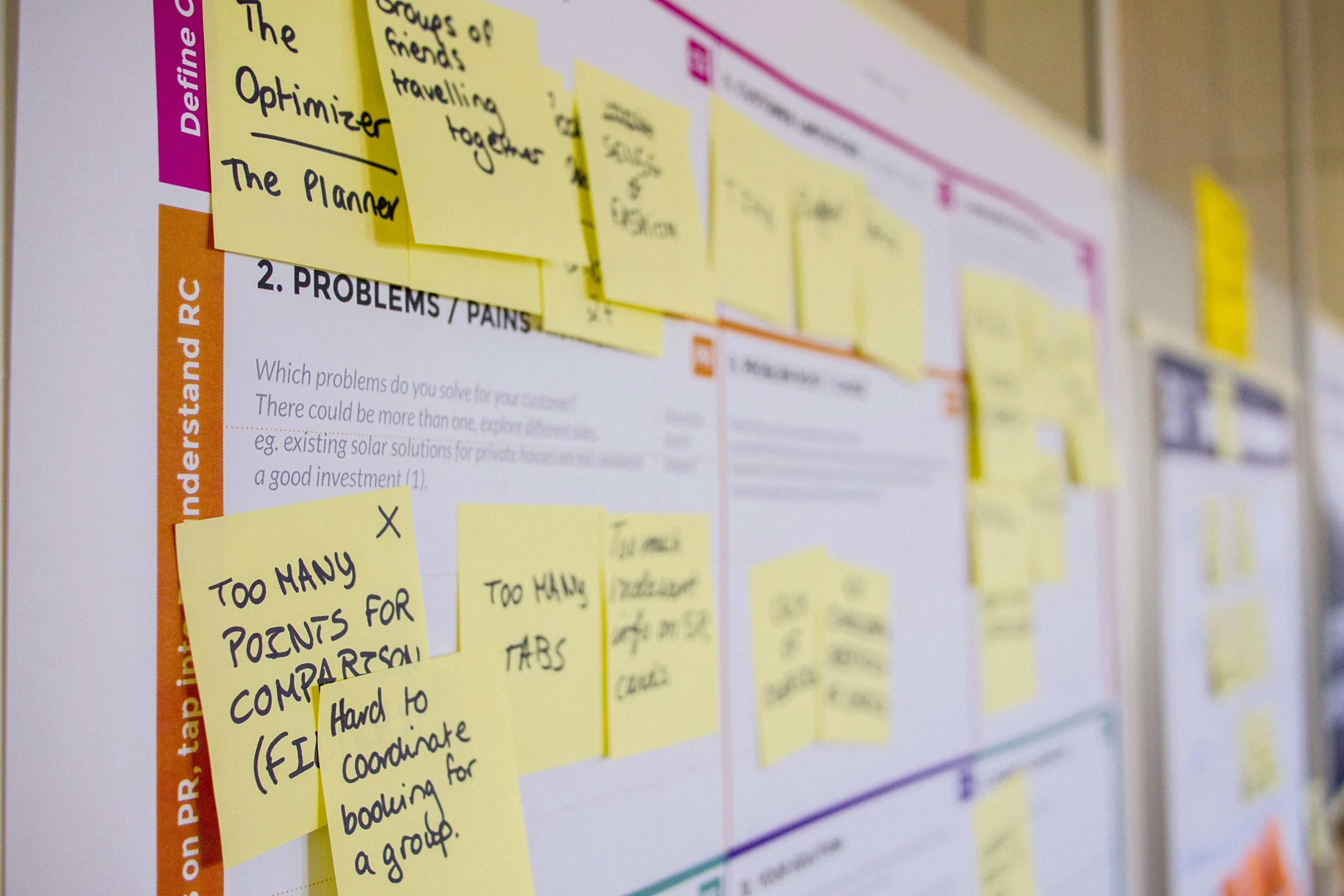
Your Salesforce org was supposed to be the system of record. Instead it became the system of accumulated compromises. Three admins ago, someone added a hundred custom fields to the Account object because a VP wanted a dashboard that no one looks at anymore. Your CPQ implementation works — sort of — but only if the rep follows an eight-step workaround that lives in a Google Doc bookmarked by four people. Marketing Cloud sends emails, but nobody can explain how the journey builder logic maps to your actual sales stages because the person who built it left in 2023.
You know you need outside help. The question is what kind. Two firms that show up consistently in Salesforce ecosystem searches are Slalom and CloudMasonry. Both are credentialed Salesforce partners. Both do CRM modernization work. But they operate at fundamentally different scales, and that difference affects everything from how fast you can get started to how much you will spend before you see a deliverable.
This guide breaks down where each firm fits — honestly — so you can make a decision based on your actual situation rather than on whoever has the better sales deck.
2. TL;DR Comparison Table

| Dimension | Slalom | CloudMasonry |
|---|---|---|
| Type of firm | Large professional services consultancy | Full-service Salesforce consulting partner |
| Primary CRM ecosystem | Salesforce + broader enterprise stack | Salesforce (multi-cloud specialist) |
| Best for company size | Mid-market to large enterprise | Mid-market to enterprise |
| Core strength | Enterprise-scale CRM modernization, org health, technical debt reduction | Focused Salesforce transformations — Sales/Service Cloud, CPQ, Marketing Cloud, Data Cloud |
| Engagement model | Program-level SOWs, multi-phase | Project-based + managed services |
| Typical engagement size | ~$250k+ (estimated from firm class and scale) | $15k–$1M+ (Clutch review data) |
| Pricing transparency | Low — enterprise SOW pricing, not published | Medium — Clutch reports $200–$300/hr, min $5k+ |
| Certifications / projects | 14,000+ Salesforce certifications; 7,400+ projects (AppExchange) | 309+ Salesforce certifications; 427+ projects (AppExchange) |
| Typical team size | 10–20 consultants for enterprise rollouts | 5–8 consultants for focused engagements |
| Key differentiator | Massive bench depth, multi-geography delivery, public sector experience; ranked #4 globally for Salesforce consulting | Specialist focus, dedicated CPQ Practice (est. 2023), faster engagement start, 85% client retention rate |
| Biggest limitation | Overhead and timeline of a large consultancy; smaller projects may not get senior attention | Smaller certified bench (~55 experts); less geographic coverage than global SIs |
3. Why This Comparison Matters
The Salesforce consulting ecosystem is enormous. Salesforce itself publishes thousands of consulting partners, and the quality variance between them is staggering. At one end, you have boutique shops with five consultants and a Clutch profile. At the other, you have global system integrators with tens of thousands of employees who happen to have a Salesforce practice buried inside a much larger business.
Slalom and CloudMasonry sit at two distinct points on that spectrum, and they represent a choice that comes up constantly in enterprise Salesforce buying decisions: do you go with the large, multi-capability consultancy that can throw bodies at a problem and has done thousands of projects, or do you go with the focused Salesforce specialist that lives and breathes the platform every day?
This is not an abstract question. The wrong choice has concrete consequences. Hire the big firm for a six-week health check and you may find yourself locked into a twelve-month transformation roadmap you did not ask for. Hire the specialist for a global multi-org consolidation and you may discover they lack the bench depth to staff the program without subcontracting.
Most of the comparison content you will find online about these firms is either vendor-written (and therefore promotional) or generated by aggregator sites that have never seen the inside of a Salesforce org. This analysis is based on publicly available data — AppExchange profiles, Clutch reviews, published service pages, and case study references — and we have flagged every place where information is not publicly available.
4. Company Profiles
4a. Slalom
Background and Positioning
Slalom is a large professional services firm — not a Salesforce shop that grew, but a consultancy that built a major Salesforce practice as part of a much broader technology and business advisory portfolio. They describe themselves as working with companies "of all sizes, from all industries," and their Salesforce AppExchange presence reflects that breadth. The firm has a multi-country footprint and publishes large-scale metrics within its Salesforce partner content: 7,400+ completed Salesforce projects and 14,000+ Salesforce certifications across the organization (per their AppExchange listing). Those numbers place Slalom at #4 globally among Salesforce consulting partners — a ranking that reflects sheer volume of delivery experience.
Slalom's positioning in the Salesforce ecosystem centers on enterprise CRM modernization and technical debt reduction. They frame their Salesforce work around assessments, visioning, IT roadmapping, solution architecture, implementation, and rollout strategy. This is the language of a firm that expects to engage at the program level — not the project level. If you are thinking about a phased, multi-quarter Salesforce transformation with executive sponsorship, governance structures, and a PMO, Slalom is built for that motion.
Their published thought leadership includes modernization and "org health" frameworks — content about simplifying Salesforce, building roadmaps, and reducing the accumulated complexity that most enterprise orgs carry after years of organic growth. They also offer a diagnostic entry point called the "Quote to Cash Health Check," which evaluates a company's existing Salesforce quoting and billing implementation for inefficiencies in product catalogs, pricing rules, approval workflows, and customizations.
Client Base and Industries
Slalom's client base skews toward larger organizations and, notably, public sector. One published example involves a DMV modernization designed and implemented on the Salesforce platform — not a typical consulting case study, and a useful signal of their ability to operate in regulated, high-scrutiny environments where compliance, accessibility, and documentation requirements are non-negotiable.
Their AppExchange listing emphasizes multi-industry coverage. In practice, a firm at Slalom's scale attracts enterprise buyers who need a partner capable of staffing a large engagement across geographies and time zones. If you have Salesforce orgs in three countries and need a single partner to run the program, Slalom's bench makes that plausible without subcontracting.
Reputation Signals
Slalom's reputation in the Salesforce ecosystem is driven by scale metrics — 14,000+ certifications, 7,400+ projects, and a #4 global ranking among Salesforce consulting partners (per AppExchange data). They are not the firm that shows up on "best boutique Salesforce partner" lists; they are the firm that shows up when procurement requires a partner with a certain headcount, geographic footprint, or public sector clearance. This is a strength for the right buyer and irrelevant for the wrong one.
A concrete example of their RevOps delivery: Slalom ran a multi-phase Salesforce overhaul for LogRhythm, a 500-employee cybersecurity firm. The engagement automated LogRhythm's Annual Recurring Revenue (ARR) calculation entirely within Salesforce — a metric the CFO now calls "the record of truth." Slalom simplified lead handoffs and made pipeline stages visible across the sales organization, replaced legacy custom code with Salesforce Lightning UI, and rolled out Advanced Approvals for faster discount processing. The team fielded 10–20 consultants across the engagement, which is typical of Slalom's enterprise staffing model.
4b. CloudMasonry
Background and Positioning
CloudMasonry is a full-service Salesforce consulting partner positioned squarely around enterprise digital transformations. Unlike Slalom, which offers Salesforce as one practice among many, CloudMasonry's entire business is built on the Salesforce platform. Their service scope covers Sales Cloud, Service Cloud, CPQ, Marketing Cloud, and Data Cloud — the full Salesforce multi-cloud stack.
Their Salesforce AppExchange listing shows 427+ completed projects and 309+ Salesforce certifications across approximately 55 US-based consultants, each averaging 5+ years of hands-on Salesforce experience (per AppExchange and company data). That bench is large enough to demonstrate real delivery maturity but small enough that you are likely to get consultants who have deep, hands-on Salesforce expertise rather than generalists who rotate between platforms. Their AppExchange profile describes their client base as "blue-chip companies," and their service framing emphasizes roadmapping, health checks, managed services, and end-user training alongside implementation work.
In 2023, CloudMasonry launched a dedicated CPQ Practice for Salesforce CPQ and Industries CPQ, led by Nikolaus Sappie, who brings 10+ years of Salesforce architecture and RevOps experience. This is not a generic "we also do CPQ" addition — it is a named practice with a named leader, which signals genuine investment in the quote-to-cash space.
CloudMasonry's positioning reflects a firm that wants to be your long-term Salesforce partner, not just your implementation vendor. They offer two defined engagement models: "Impact" (fixed-scope projects with a set timeline and budget) and "Momentum" (ongoing retainer-style support that effectively extends your internal Salesforce team). This dual model gives buyers a way to start with a bounded project and transition to managed services without changing partners.
Client Base and Industries
CloudMasonry's AppExchange listing identifies four primary verticals: communications/media/technology, financial services, energy/utilities, and healthcare/life sciences. This is a more focused industry profile than Slalom's "all industries" positioning, and it reflects the kind of specialization that enterprise buyers in regulated or complex industries often look for.
Their geographic coverage spans the US and UK — enough for most North American and European Salesforce programs, but not the global footprint that a firm like Slalom can offer across Asia-Pacific, Latin America, and other regions.
Reputation Signals
CloudMasonry's Clutch profile provides useful economic data. They report a minimum project size of $5,000+, hourly rates of $200–$300, and a "most common project size" range of $10,000–$49,999. Clutch review data also shows projects ranging from approximately $15,000 to over $1 million. This range tells you something important: CloudMasonry can do a focused health check or a targeted integration project without requiring you to commit to a six-figure program, but they also have the capacity to run large-scale transformations when the scope demands it.
Their 55 certified experts represent a focused bench with 309+ Salesforce certifications across the team (per AppExchange data). You will likely work with people who do Salesforce work full-time, not consultants who split time between Salesforce, ServiceNow, and Workday depending on what project is staffed that quarter. The firm reports an 85% client retention rate, which is a meaningful signal — it suggests that clients who engage CloudMasonry tend to stay, either through managed services retainers or repeat project work.
Published case studies provide more specific evidence than the original article captured. In an engagement with Articulate (an e-learning SaaS company with 120,000+ customers), CloudMasonry implemented Salesforce CPQ and Billing, delivering faster and more accurate quoting, full automation of invoicing, and clear visibility into Annual Recurring Revenue (ARR). In a separate engagement with Tri Pointe Homes (one of the largest US homebuilders), CloudMasonry deployed Salesforce Lightning Scheduler, resulting in measurable decreases in sales cycle time and higher customer satisfaction scores. Typical team size for a CloudMasonry engagement runs 5–8 consultants — lean enough for accountability, deep enough for coverage.
5. Service Deep-Dive: Salesforce CRM Modernization
5a. How Slalom Approaches CRM Modernization
Methodology
Slalom's published approach to Salesforce modernization is structured around assessments, visioning, and roadmapping before implementation begins. This is classic enterprise consulting methodology — and it exists for a reason. When you are dealing with an org that has accumulated years of technical debt, custom objects that nobody remembers building, and workflows that conflict with each other, you need a structured diagnostic phase before you start changing things.
Their "org health" framing is notable. Rather than positioning the work as "fixing your Salesforce," Slalom frames it as modernization — simplifying the org, reducing technical debt, and building a sustainable architecture that can evolve. This framing matters because it sets expectations correctly: this is not a two-week cleanup, it is a phased program that will touch process, data, and technology in sequence.
What the Engagement Looks Like
A typical Slalom Salesforce engagement follows a pattern familiar to anyone who has worked with large consulting firms: discovery and assessment, architecture design, phased implementation, rollout, and stabilization. The team will likely include a mix of solution architects, technical consultants, project managers, and change management specialists — typically 10–20 consultants for an enterprise rollout (as seen in the LogRhythm engagement, which staffed architects, PMs, developers, and change management leads). For a mid-to-large enterprise, expect a multi-month timeline and a program-level SOW with defined phases and governance checkpoints.
Slalom's scale means they can staff parallel workstreams. If you need Sales Cloud remediation, Marketing Cloud configuration, and a Data Cloud implementation happening concurrently, they have the bench to put separate teams on each track with an architecture layer coordinating across them. This is genuinely difficult for smaller firms to replicate.
Evidence of Results
Slalom's public evidence has improved since their earlier, more generic case study library. Two examples stand out:
Their DMV modernization required designing and implementing a system on the Salesforce platform for a government agency. Public sector work is a meaningful proof point because it involves procurement rigor, accessibility requirements, security constraints, and documentation standards that commercial engagements often do not. If your organization operates under similar regulatory pressures (financial services, healthcare, government contracting), this is a relevant signal.
More relevant for CRM modernization buyers is the LogRhythm case study. LogRhythm is a 500-employee cybersecurity company, and Slalom ran a multi-phase Salesforce transformation that touched CPQ, approvals, pipeline management, and financial reporting. The specific outcomes are worth enumerating because they are unusually concrete for a large-firm case study:
- Automated ARR calculation entirely within Salesforce. LogRhythm's CFO is quoted saying that ARR "comes from Salesforce [as] the record of truth" — meaning finance trusts the CRM data, which is the holy grail of RevOps alignment.
- Simplified lead handoffs and visible pipeline stages across the sales organization, replacing opaque handoff processes with trackable stage transitions.
- Replaced legacy custom code with Lightning UI, reducing the maintenance burden on the internal admin team.
- Rolled out Salesforce Advanced Approvals for faster discount processing, removing a bottleneck that had been slowing deal velocity.
The LogRhythm engagement fielded a team of 10–20 Slalom consultants (architects, PMs, developers, change management leads), which is representative of how Slalom staffs enterprise Salesforce programs. For buyers evaluating Slalom, this case study is the one to reference — it shows the firm operating in the commercial mid-market, not just in public sector or Fortune 500 contexts.
5b. How CloudMasonry Approaches CRM Modernization
Methodology
CloudMasonry positions their modernization work around Salesforce health checks and value assurance — a diagnostic-first approach that evaluates the current state of your org, identifies technical debt and underutilized capabilities, and produces a roadmap for remediation and optimization. This is conceptually similar to Slalom's assessment methodology, but with one important difference: CloudMasonry's assessment is Salesforce-native. Their consultants are evaluating your org against Salesforce best practices specifically, not against a generic enterprise architecture framework that happens to include Salesforce.
Their service scope explicitly includes data migration and complex integrations — two areas where Salesforce modernization projects routinely get stuck. A Salesforce org that has been in production for five or more years almost always has integration debt: middleware that nobody maintains, API connections to tools the company no longer uses, and data flows that duplicate records across systems. CloudMasonry's positioning suggests they engage with this layer directly rather than treating it as out of scope.
What the Engagement Looks Like
CloudMasonry's engagement model offers more flexibility than a typical large-firm SOW structure. Their two defined models — Impact (fixed-scope, fixed-budget projects) and Momentum (ongoing retainer support) — give buyers clear options. Clutch data shows projects as small as $15,000 and as large as $1 million+, which means they can scope work to match your actual need rather than requiring a minimum program size. Typical team size runs 5–8 consultants, drawn from their bench of ~55 US-based Salesforce specialists. If what you need is a four-week health check with a remediation roadmap, CloudMasonry can do that without bundling it into a larger transformation program.
Their managed services offering also matters for post-implementation. One of the most common failure modes in Salesforce modernization is the "handoff cliff" — the implementation partner finishes, hands over documentation, and leaves. Three months later, the org starts drifting back toward complexity because nobody on the internal team has the capacity or expertise to maintain the architecture decisions that were made. CloudMasonry's managed services model provides a mechanism to prevent that drift.
Their end-user training offering is worth noting separately. Technical modernization is worthless if the people using the system do not understand what changed or why. CloudMasonry explicitly includes training as a service line, which signals awareness that adoption is the ultimate success metric for any CRM transformation.
Evidence of Results
CloudMasonry's AppExchange profile shows 427+ completed projects with 309+ certifications across their team — numbers that have grown significantly (up from 90 projects in earlier listings) and indicate sustained delivery volume. Their industry concentration in financial services, healthcare, energy, and media/tech means their team has encountered the compliance, data sensitivity, and integration complexity that those verticals produce.
Unlike the original version of this analysis, CloudMasonry now has published case studies worth citing:
-
Articulate (e-learning SaaS, 120,000+ customers): CloudMasonry implemented Salesforce CPQ and Billing with Avalara tax integration. Results included faster and more accurate quoting (replacing manual spreadsheet-based processes), full automation of invoicing and subscription billing, and clear visibility into Annual Recurring Revenue (ARR) directly from Salesforce data. The engagement used a phased "Crawl and Walk" methodology — first redesigning account structures and CPQ configuration, then migrating legacy data and building SaaS analytics.
-
Tri Pointe Homes (one of the largest US homebuilders): CloudMasonry deployed Salesforce Lightning Scheduler for home tour bookings, producing measurable decreases in sales cycle time and higher customer satisfaction scores via automated round-robin appointment scheduling and improved data quality in lead handling.
These case studies are particularly useful because they show specific technical decisions and measurable outcomes — not just "we helped a client with Salesforce." The 85% client retention rate reported by the firm corroborates the pattern: clients who engage CloudMasonry tend to come back.
6. Pricing and Engagement Economics
Pricing Comparison Table
| Dimension | Slalom | CloudMasonry |
|---|---|---|
| Published pricing? | No | Partially (via Clutch) |
| Minimum engagement | Not published — enterprise SOW model | $5,000+ (Clutch) |
| Typical project range | ~$250k+ (estimated from firm class) | $15k–$1M+ (Clutch review data) |
| Hourly rate (if known) | Not published | $200–$300/hr (Clutch) |
| Most common project size | Not available | $10,000–$49,999 (Clutch) |
| Retainer / managed services? | Yes — ongoing advisory and support | Yes — "Momentum" retainer model + "Impact" fixed-scope projects |
| Contract structure | Program-level SOWs, multi-phase | Impact (fixed-scope/budget) + Momentum (ongoing retainer) |
Analysis
The economics here reflect the structural difference between a large consultancy and a specialist partner.
Slalom does not publish pricing, which is standard for firms at their scale. Expect program-level SOWs with defined phases, deliverables, and change-order provisions. Based on their position in the market and the typical engagement size for large Salesforce SIs, a meaningful Slalom engagement — one that includes assessment, architecture design, implementation, and stabilization — will likely start in the mid-six-figure range for a mid-to-large enterprise. Smaller engagements are possible, but a firm of Slalom's size has overhead costs that make sub-$100k projects economically unattractive for them. This does not mean they will not take the work; it means you may not get their best people on it.
CloudMasonry's Clutch data provides more transparency. A $200–$300/hr rate is competitive for experienced Salesforce consultants (senior Salesforce architects on the open market command $200–$350/hr in 2026). The $5,000 minimum means they will scope a focused engagement — a health check, a specific integration fix, a CPQ remediation sprint — without requiring you to commit to a transformation program. Their "most common project size" of $10,000–$49,999 suggests that many clients engage CloudMasonry for targeted, high-value work rather than open-ended programs.
The hidden cost question. For both firms, the real pricing risk is scope creep — and messy CRM projects are particularly prone to it. You start with "clean up our opportunity pipeline stages" and discover that the pipeline stages are entangled with a custom forecasting workflow that feeds a finance system through middleware that has not been updated in two years. Ask both vendors how they handle scope changes discovered during implementation. Slalom will likely have formal change-order processes baked into their SOW structure. CloudMasonry's smaller engagement model may offer more flexibility to adjust scope on the fly, but you will want that documented.
Value at different scales. If your Salesforce modernization is a $500k+ program with multiple workstreams, Slalom's bench depth and program management capability justify their higher total cost. If your need is a $50k–$150k focused transformation — a specific cloud remediation, a data migration, a CPQ overhaul — CloudMasonry will likely deliver comparable technical quality at a lower total cost, with less organizational overhead.
7. Client Fit Matrix
Best fit for Slalom:
- You are a large enterprise (1,000+ employees) with multiple Salesforce orgs or a complex multi-cloud Salesforce footprint, and you need a single partner to run a coordinated modernization program across business units and geographies.
- Your organization has public sector, government, or heavily regulated industry requirements where the consulting partner needs to meet specific compliance, security, and procurement standards.
- You need more than Salesforce — your CRM modernization is part of a broader digital transformation that touches other enterprise systems, and you want one firm to own the architecture layer across all of them.
- Your procurement process requires a consulting partner above a certain revenue threshold, employee count, or geographic footprint. Slalom checks those boxes in ways that mid-sized Salesforce specialists cannot.
Best fit for CloudMasonry:
- You are a mid-to-large enterprise that needs focused Salesforce expertise — not a broad consulting engagement, but a partner that lives on the Salesforce platform and can go deep on Sales Cloud, Service Cloud, CPQ, Marketing Cloud, or Data Cloud.
- You want to start with a bounded engagement (a health check, a specific integration, a targeted remediation) before committing to a larger transformation. CloudMasonry's engagement flexibility allows this; a large SI's SOW structure may not.
- You operate in financial services, healthcare, energy/utilities, or media/technology and want a partner with demonstrated experience in your vertical.
- You value working with a team where senior Salesforce consultants do the hands-on work, rather than a model where senior architects scope the project and junior consultants execute it.
- You want a path from project delivery to managed services — a partner who will stay engaged after the implementation to keep the org healthy and evolving.
Other firms to consider:
If your Salesforce modernization is primarily a CPQ or Quote-to-Cash problem, Simplus has deep specialization in that specific area. If you need a partner with global scale backed by a major IT services company, Coastal (now part of TCS) brings 400+ professionals and 3,000+ multi-cloud certifications. Firms like Cortado Group approach CRM modernization from a commercial strategy perspective first — starting with how the revenue engine should work before touching platform configuration. And if your stack is HubSpot rather than Salesforce, Aptitude 8 and Huble operate at the enterprise level with technical depth comparable to what Slalom and CloudMasonry bring to Salesforce.
8. Head-to-Head Scoring Matrix
| Dimension | Slalom | CloudMasonry | Weight |
|---|---|---|---|
| Salesforce-specific expertise | 4/5 | 5/5 | 25% |
| Methodology clarity | 4/5 | 3/5 | 15% |
| Pricing transparency | 2/5 | 4/5 | 10% |
| Client evidence / case studies | 4/5 | 4/5 | 15% |
| Platform breadth | 5/5 | 3/5 | 10% |
| Engagement flexibility | 2/5 | 4/5 | 10% |
| Enablement & knowledge transfer | 3/5 | 4/5 | 10% |
| Speed to first value | 2/5 | 4/5 | 5% |
| Weighted total | 3.50 | 3.95 | 100% |
Scoring notes:
-
CloudMasonry scores highest on Salesforce-specific expertise (5/5) because their entire business is built on the Salesforce platform. Every consultant, every engagement, every internal process is Salesforce-focused. Slalom earns a strong 4/5 — their Salesforce practice is mature and well-credentialed — but Salesforce is one practice among many, and that dilution matters when you need deep platform knowledge on a specific cloud or module.
-
Slalom leads on platform breadth (5/5) because they operate across the enterprise technology stack. If your CRM modernization touches SAP, Workday, Snowflake, or custom applications alongside Salesforce, Slalom can bring expertise across all of them. CloudMasonry's 3/5 reflects their intentional focus on Salesforce — which is a strength in most contexts, but a limitation when the project requires significant non-Salesforce work.
-
Slalom leads on methodology clarity (4/5) because large consultancies invest heavily in published frameworks, assessment methodologies, and governance structures. Their "org health" and modernization framing provides buyers with a clear picture of what the engagement will look like before it starts. CloudMasonry's 3/5 reflects a less publicly visible methodology — the work gets done well, but the published frameworks are less prominent.
-
CloudMasonry leads on engagement flexibility (4/5) and speed to first value (4/5) because their engagement model accommodates projects from $15k to $1M+. You can start with a bounded health check and expand based on findings. Slalom's 2/5 on both dimensions reflects the reality that large consultancies have longer sales cycles, heavier SOW structures, and minimum viable engagement sizes that make quick-start, small-scope work less natural.
-
Client evidence is a 4/4 tie — an improvement from our original analysis. Slalom's LogRhythm case study provides unusually specific RevOps outcomes (automated ARR, Advanced Approvals, Lightning migration) alongside their public sector work. CloudMasonry's Articulate and Tri Pointe Homes case studies now provide concrete, citable results (automated invoicing, ARR visibility, sales cycle reduction). Both firms have materially strengthened their public evidence since this comparison was first published.
-
Pricing transparency: CloudMasonry 4/5, Slalom 2/5. CloudMasonry's Clutch data provides real economic signals — hourly rates, project ranges, minimum sizes. Slalom publishes nothing on pricing, which is standard for their firm class but unhelpful for buyers doing early-stage evaluation.
9. Real-World Decision Scenarios
Scenario 1: "The Multi-Org Enterprise Consolidation"
You are the VP of IT at a $2 billion manufacturing company. Through a series of acquisitions over the past decade, you now have four separate Salesforce orgs — one per business unit — with different data models, different stage definitions, different CPQ configurations, and three different integration middleware platforms connecting them to your ERP. The CEO wants a single view of the customer across all business units within eighteen months. Your internal Salesforce team is six admins, and they are fully consumed by day-to-day support.
Best fit: Slalom. This is an enterprise program, not a project. You need a partner that can staff multiple workstreams simultaneously — data architecture, integration design, CPQ harmonization, change management — and coordinate them under a unified program governance structure. Slalom's bench depth, multi-geography delivery capability, and experience with large-scale Salesforce programs makes them the natural choice. CloudMasonry could contribute to specific workstreams (particularly CPQ or a single cloud remediation), but the overall program coordination and staffing scale favors a large SI.
Scenario 2: "The Salesforce Health Check Before the Board Meeting"
You are the Salesforce Admin Manager at a $300 million financial services firm. Your CTO has been asked by the board to present a "state of the technology stack" report in eight weeks, and the Salesforce org is the biggest question mark. You know there are problems — adoption is low in the service team, Marketing Cloud is underutilized, and your data quality is suspect — but you need an independent assessment with a remediation roadmap before you can ask for budget. You have $40,000 approved for an external assessment.
Best fit: CloudMasonry. This engagement is bounded, time-sensitive, and requires deep Salesforce diagnostic expertise. CloudMasonry's health check and value assurance offering maps directly to this need. Their $200–$300/hr rate and $5,000 minimum entry point mean your $40,000 budget buys you 130–200 hours of senior Salesforce consulting time — enough for a thorough org assessment across Sales Cloud, Service Cloud, and Marketing Cloud, with a prioritized remediation roadmap as the deliverable. A firm of Slalom's size could do this work, but the sales cycle alone might consume half your eight-week window, and a $40,000 engagement is unlikely to attract their most experienced Salesforce architects.
Scenario 3: "The Data Cloud Bet"
You are the Director of Revenue Operations at a $500 million media and technology company. You have a mature Salesforce implementation — Sales Cloud and Service Cloud are well-configured and adopted — but leadership wants to invest in Salesforce Data Cloud to unify customer data across your CRM, your product analytics platform, and your advertising systems. This is a strategic bet, not a remediation project. You need a partner who understands Data Cloud deeply and can design an architecture that connects to your existing Salesforce investment.
Best fit: either, depending on scope. If Data Cloud is the primary initiative and the Salesforce integration layer is the focus, CloudMasonry's explicit Data Cloud capability and Salesforce-native expertise makes them a strong choice. Their team works across the full Salesforce multi-cloud stack daily, and Data Cloud is part of that stack. If the Data Cloud implementation is part of a broader data strategy that also involves non-Salesforce data platforms (a CDP, a data warehouse, a BI layer), Slalom's cross-platform expertise becomes more relevant. The deciding factor is whether this is a Salesforce project or an enterprise data project that happens to include Salesforce.
10. The Intangibles: What Doesn't Show Up in Feature Matrices
Every vendor comparison eventually bumps against the soft factors that matter enormously in practice but resist quantification.
Who actually does the work? At a large firm like Slalom, the team that sells the engagement and the team that delivers it are often different people. The senior partner who leads the pitch may not be the person reviewing your data model at 10pm on a Thursday. Ask who will be on the delivery team, what their Salesforce certification profile looks like, and whether they are full-time employees or subcontractors. At a firm of CloudMasonry's size, you are more likely to work with the same senior consultants throughout the engagement — but you should still ask. Size does not guarantee continuity, and neither does specialization.
Will they tell you no? The best consulting partners push back. They tell you that your custom object model is over-engineered and should be simplified, even when you have spent three years building it. They tell you that migrating to CPQ does not make sense for your deal structure. They tell you that your data quality problem is actually a process problem and no amount of Salesforce configuration will fix it until your sales managers enforce data entry discipline. Ask both vendors for an example of a time they told a client not to do something the client wanted to do. If they cannot answer, that is a signal.
Post-engagement durability. After the consultants leave, can your internal team maintain what was built? This is the most overlooked dimension in Salesforce consulting. A beautiful architecture that requires a senior Salesforce architect to modify is a beautiful liability. Ask both vendors what their enablement deliverables look like. Ask for examples of documentation they produce. Ask whether they offer post-project office hours or a lightweight managed services tier for the first 90 days. The goal is not to keep paying consultants forever — it is to reach a point where your internal team is self-sufficient on the architecture that was built.
Cultural fit. Slalom operates like a large consultancy — structured, process-driven, governance-oriented. That is a feature if your organization values formal project management and executive reporting cadences. CloudMasonry operates more like a specialist partner — likely faster to engage, more direct in communication, less overhead between the request and the work. Neither culture is better; the question is which one matches how your team actually works.
11. Methodology and Data Sources
This analysis is based on publicly available information, including:
- Salesforce AppExchange partner listings (certification counts, project volumes, ratings) for both Slalom and CloudMasonry
- Clutch reviews and profile data (pricing, project sizes, hourly rates) for CloudMasonry
- Slalom published content: Quote to Cash Health Check offering page, Lead-to-Cash webinar materials, LogRhythm customer story
- CloudMasonry published content: CPQ Practice launch announcement (2023), Articulate case study, Tri Pointe Homes case study, Services page (Impact/Momentum engagement models), Experience page (team composition and certifications)
- Vendor websites and service pages for both firms
Pricing data for CloudMasonry is sourced from Clutch platform reporting (minimum project size, hourly rates, most common project size, and review-derived project ranges). Slalom pricing is estimated based on their position in the market and the typical engagement economics of large Salesforce consulting partners; no specific pricing data was available from public sources. CloudMasonry's 85% client retention rate is sourced from company-published materials. Slalom's #4 global ranking and certification/project counts are sourced from their AppExchange listing.
Where information was not publicly available, we have noted that explicitly. Engagement size estimates for Slalom are indicative approximations, not sourced from the vendor.
If Slalom or CloudMasonry believes we have misrepresented their offering, capabilities, or market position, we welcome corrections and will update this analysis accordingly.
Sources
- HubSpot Solutions Directory — partner tiers, accreditations, client lists, industry specializations
- Salesforce AppExchange — project counts, certification counts, partner ratings
- Clutch — minimum project sizes, hourly rates, most common engagement sizes, client reviews
- G2 — vendor ratings and review volume
- Vendor websites — published case studies, service descriptions, pricing pages, team information